"Thus far the Lord has helped us." Samuel said it mid-battle, not after the win. What 1 Samuel 7 teaches about trusting God in the middle.
We spend most of our lives waiting for the "after." After the kids grow up. After the promotion comes through. After the diagnosis clears. After the marriage stops feeling like work. We treat faith like a finish-line race — like the whole point is to get to the part where the fight is over and you can finally exhale.
Here's the problem. Life doesn't really hand out clean finish lines. It hands you long, messy middles. Most of us aren't standing at the end of anything right now. We're standing in the middle of something unfinished — a prayer that hasn't been answered yet, a battle that isn't close to over, a relationship that's still work every single day.
So what do you do when you're not at the end, but you're too far in to quit? You learn what Samuel already knew.
The 20 years nobody wants to talk about
To understand 1 Samuel 7, you have to know what came before it, because Israel's history with God wasn't a highlight reel.
Twenty years earlier, at a place called Ebenezer, Israel had dragged the Ark of the Covenant into battle like a lucky charm — treating the presence of God as a tool instead of a relationship. It backfired. They lost the battle, lost the Ark, and lost whatever pride they had left. What followed was two decades of Philistine oppression. Two decades of defeat being the normal state of things.
That's the backstory. Not a victory lap. A long stretch of nothing going right.
Attacked while they were praying
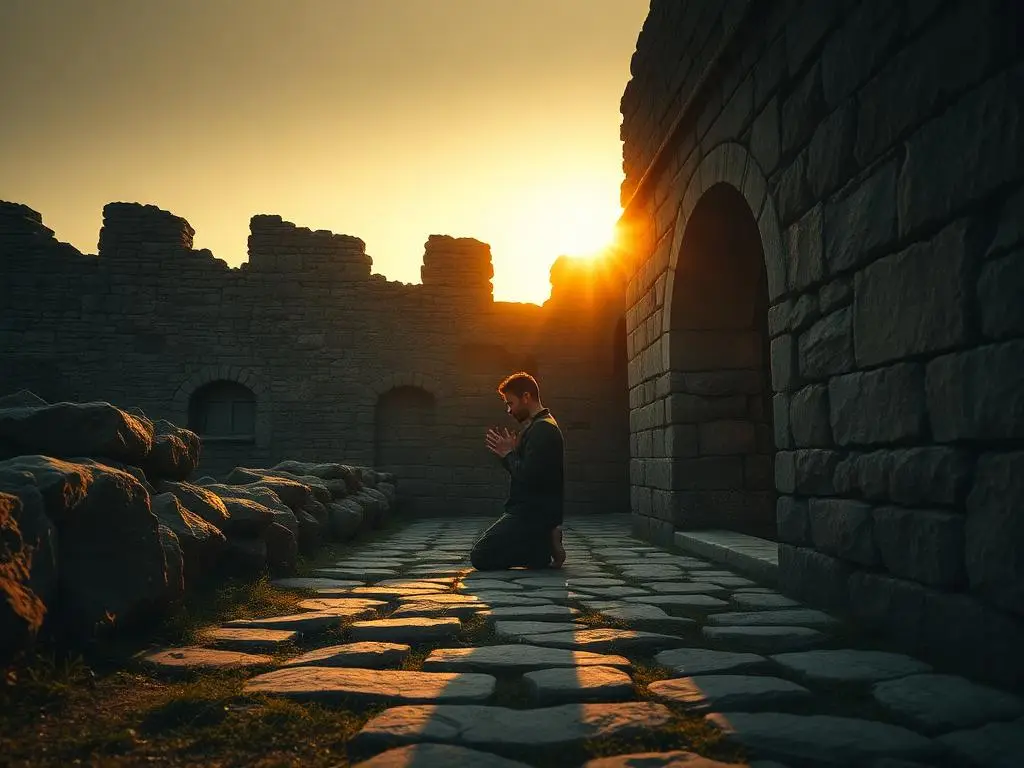
Fast-forward to chapter 7. Samuel finally gathers the people at a place called Mizpah to actually deal with what's broken — real repentance, real honesty before God, no more shortcuts. And right when they're in that posture, weak and exposed and finally telling the truth, the Philistines hear about the gathering and move in for the kill.
Notice the timing. The attack doesn't come after Israel gets their act together. It comes while they're still in the middle of getting honest with God.
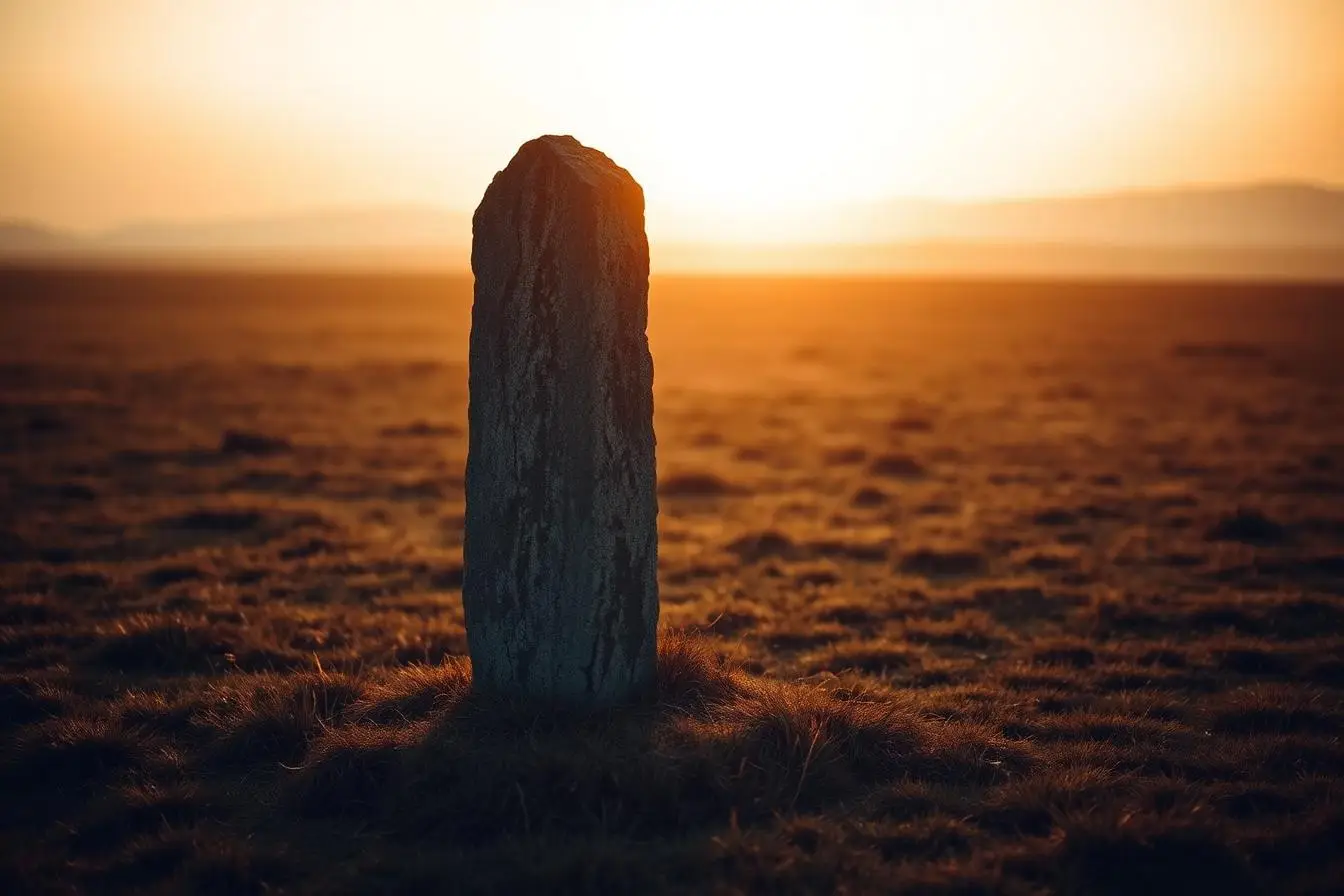
God shows up. He thunders against the Philistines and throws the whole army into confusion. But here's what's easy to miss — the battle is still raging when Samuel does something strange. He stops. In the middle of an active fight, with the threat not even close to fully resolved, he grabs a massive stone, sets it upright, and names it Ebenezer. Stone of help.
Then he says the line: "Thus far the Lord has helped us."
Not "we've arrived." Not "it's finally over." Thus far. That's the whole theology in two words — an honest acknowledgment of grace, made in the middle of a journey that isn't done.
Samuel didn't wait for the war to end to say God was faithful. He said it while he could still hear the fighting.
Gratitude is a weapon, not a formality
Think about how impractical this moment actually is. Israel is under attack. People are terrified, unarmed, mid-crisis — and their leader stops to build a monument? That's not the move you'd expect from a battlefield.
Except it is exactly the move, because remembering is spiritual warfare.
The enemy's favorite weapon when you're stuck in a hard middle isn't usually a direct attack. It's amnesia. It's getting you to forget how God carried you through the last storm so you'll believe He's not going to carry you through this one. Stopping to give thanks in the middle of the fight isn't a nice gesture — it cuts off the enemy's momentum. It anchors your soul so fear doesn't get to sweep you out to sea.
David understood this too. "Bless the Lord, O my soul, and forget not all his benefits" — that's a man mid-struggle, commanding his own memory not to betray him. Gratitude isn't passive. It's a weapon you point at your own forgetfulness.
"Thus far" is how you trust "what's next"
Here's the second thing this stone does. It doesn't just mark gratitude — it becomes the foundation for trust going forward.
You cannot honestly trust God with what's next until you're honest about what He's already carried you through. When Samuel says "thus far the Lord has helped us," he's not just looking backward. He's building the case for tomorrow. Twenty years of ruin, and God still got them to this moment. That's not nothing. That's evidence.
This is the exact move David makes a few chapters later, standing in front of Goliath. He doesn't talk himself into courage out of nowhere. He looks back: "The Lord who rescued me from the paw of the lion and the paw of the bear will rescue me from the hand of this Philistine." He uses his own Ebenezer — his own "thus far" — to walk toward a giant he has no business fighting.
That's the shift. You stop praying "God, fix this right now" and start praying "You got me to this point. I trust You with the next one."
For your own reflection
A few questions worth sitting with this week, wherever your own "middle" is right now:
- What's the "after" you've been waiting for before you'll let yourself believe God is good?
- If you set up your own Ebenezer stone today, what would it say? What has God actually carried you through, thus far?
- Where are you praying for the fight to end instead of asking God to meet you in the middle of it?
- What's your version of the lion and the bear — the past proof you keep forgetting to bring into your present fear?
You're probably not at the finish line. That's okay. You were never promised a finish line today — you were promised help. And thus far, He's given it.
Written by
Pastor Cody
Lead Pastor